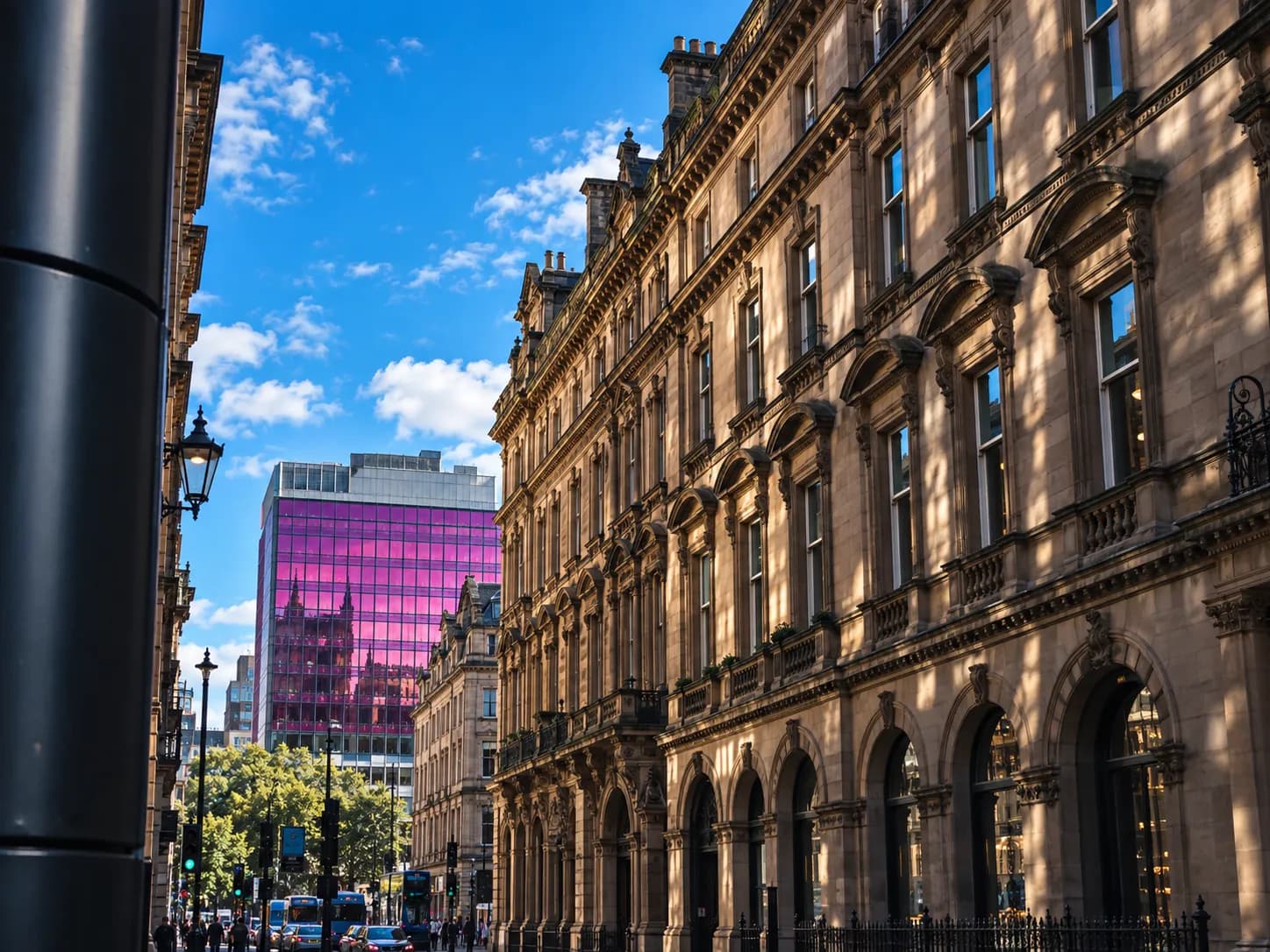
Glasgow's housing tells you its age from the street, and the windows do most of the talking. A sandstone tenement in Dennistoun, a four in a block in Knightswood and a 1990s flat in the Merchant City all have different windows, and each comes with its own rules and problems when the time comes to replace them.
Sash and case
This is the window most people picture when they think of a Glasgow tenement. Two timber sashes slide up and down inside a case, hung on cords and balanced by iron or lead weights hidden in the frame. We call it sash and case, which still confuses installers from south of the border who say box sash or sliding sash.
Most tenements built between about 1860 and 1914 have them, so that covers a large share of Hyndland, Shawlands, Dennistoun, Govanhill, Partick and Pollokshields. The original glass is single, the cords have often snapped and been painted over, and the meeting rails let the draught in. That is why so many were ripped out in the 1980s and 90s.
If you still have the originals, timber sash and case can be double glazed now. Slim double glazed units go into the existing sashes or into new timber sashes made to the same profile, and the astragals (the glazing bars) stay where they were. uPVC sash windows exist too and copy the look fairly well, sash horns included, but the council does not accept them everywhere. More on that further down.
Bay and oriel windows
Red sandstone tenements from the 1890s onward often have a canted bay on the front, three windows angled out from the wall. Some have oriels, bays that project from an upper floor and never reach the ground. Both are usually sash and case, and both are harder to replace than a flat window. The corner posts carry weight, the angles have to be measured on the day rather than taken off a plan, and a bay in a conservation area will almost certainly have to go back looking the way it did.
Casements in the interwar suburbs
The council schemes of the 1920s and 30s, places like Knightswood, Mosspark, Riddrie and King's Park, moved away from sash and case. The four in a block cottage flats and semis there mostly got side hung casements, first in timber and later in steel. The Crittall style steel frames with the small panes are the ones that rust at the corners and never quite shut. A few 1930s private houses have curved sun trap bays in steel, which look lovely and are a pain to replace like for like.
For these houses aluminium or uPVC casements are the usual replacement, and planning is rarely an issue unless the house happens to be listed.
Post war estates and the high rises
Castlemilk, Drumchapel, Easterhouse and Pollok, along with the tower blocks, have been through at least one round of window replacement already, usually by the council or a housing association, so most now have uPVC. If you own a former council flat the windows may be twenty or thirty years old and near the end of their life. Tilt and turn is common in the high rises because you can clean the outside of the glass from inside, and that is normally what goes back in.
Modern flats
Anything built after the mid 1990s in the Merchant City, Finnieston or along the Clyde tends to have aluminium or uPVC tilt and turn windows, or large fixed panes with a single opener. The usual problem is a failed sealed unit, where condensation appears between the panes. The other thing to watch is the factor. In a modern block the factor or the title deeds will often say the windows have to match across the building, so check before you order.
Conservation areas and listed buildings
This is where Glasgow gets particular. Large parts of the West End, the Park district, Pollokshields, Strathbungo and Dennistoun are conservation areas, and Glasgow City Council publishes its own guidance on replacement windows. In a conservation area the council usually expects timber sash and case that matches the originals, and swapping them for uPVC can need planning permission you may not get. Listed buildings need listed building consent for any window change at all.
Before you get quotes, look your address up on the council's planning portal to see whether you are in a conservation area or the building is listed. It takes five minutes and saves a lot of grief later.
Tenement etiquette
Each owner in a tenement is responsible for their own windows, but the close looks odd when one flat has white uPVC and the rest are painted timber. Some deeds require matching windows, and a few closes club together and do the whole building at once, which brings the price down. It is worth knocking on a couple of doors before you sign anything.
Whatever the building, the thing that matters is a proper survey on site, with the measurements taken on the day and a clear answer on whether permission is needed, because anyone quoting from a photograph is guessing.