Glasgow was designated a UNESCO City of Music in 2008, recognition of a live music ecosystem that stretches from intimate clubs to arenas hosting global acts. The city's venues have shaped British music history and continue to support the largest music economy in the United Kingdom outside London.
The Barrowland Ballroom: A Glasgow Institution
The Barrowland Ballroom opened in 1934 on the Gallowgate, built by Maggie McIver, the entrepreneur known as the "Barras Queen." A fire in 1958 largely destroyed the original building, but it was completely rebuilt and reopened on Christmas Eve 1960. The venue has since become one of the most celebrated concert halls in Britain.
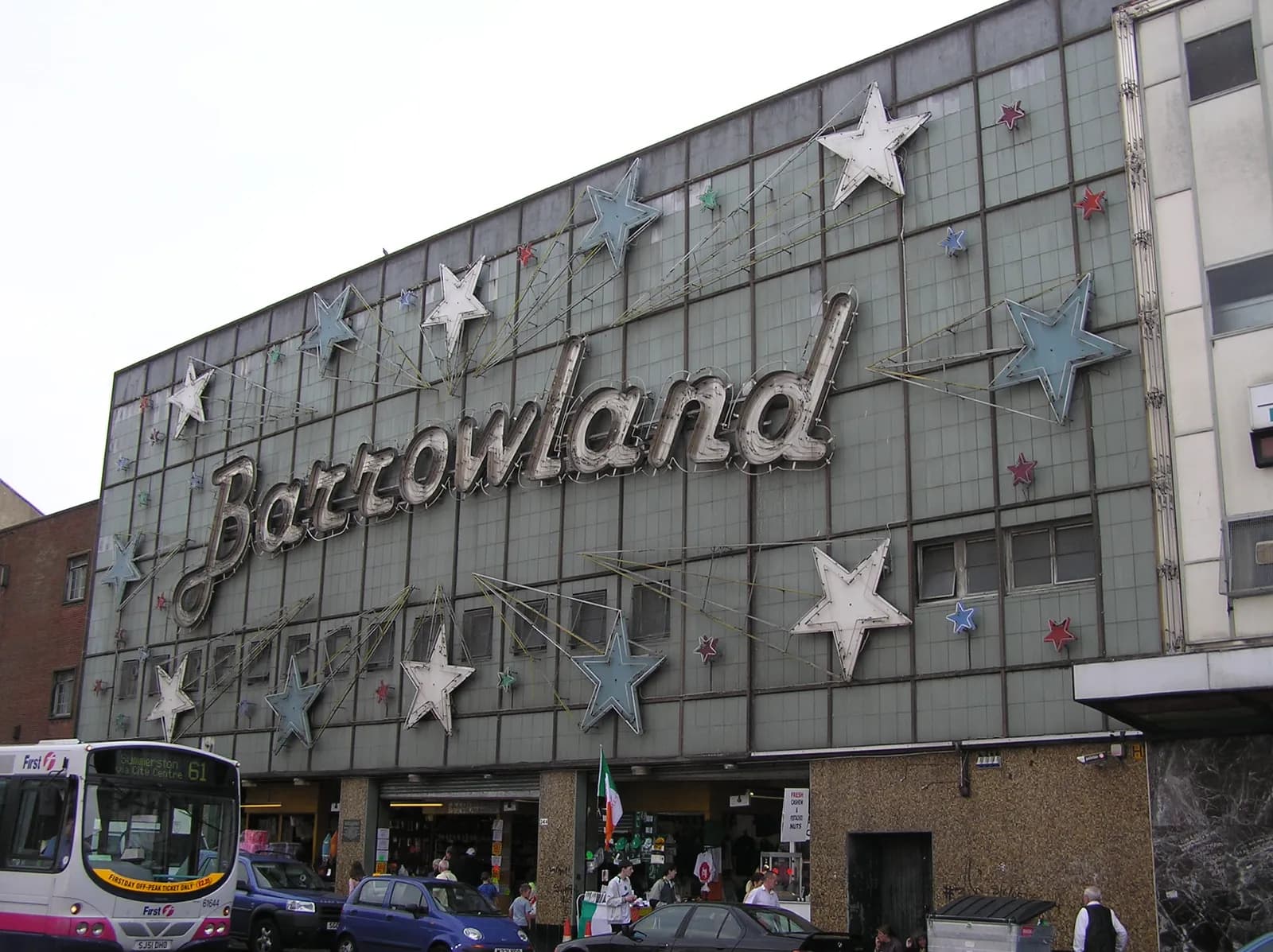
With a standing capacity of 1,900, the ballroom is renowned for its acoustics and its sprung dance floor. The large animated neon sign that adorns the front of the building has become a landmark in Glasgow's East End. Since its relaunch as a concert venue in 1983, when Simple Minds filmed the video for their single "Waterfront" there, the Barrowland has hosted acts across multiple decades. Northern Irish punk band Stiff Little Fingers have performed sold-out concerts at the venue every St Patrick's Day since 1992, and recorded their album Best Served Loud there in 2016. Scottish singer Amy Macdonald paid tribute to the hall with her song "Barrowland Ballroom" on her 2007 album This Is The Life.
The venue's cultural footprint extends beyond music. A mural inspired by Douglas Stuart's Booker Prize-winning novel Shuggie Bain was unveiled on the ballroom wall in April 2021. Since 2020, the Barrowland has hosted the annual Scottish Music Awards. Adjacent to the main hall, Barrowland 2 operates as a bar and smaller gig space, often showcasing local Glasgow bands.
King Tut's Wah Wah Hut: Where Careers Begin
King Tut's Wah Wah Hut opened in February 1990 on St Vincent Street, founded by Stuart Clumpas of DF Concerts to provide a platform for promoting bands at club level. With a capacity of 300, the venue has built a reputation as one of the most important talent incubators in British rock and pop.
The venue's place in music history was secured in 1993, when The Verve, Radiohead, and Oasis all performed there within a two-week period. Oasis, then an emerging band, forced their way on stage to perform and were subsequently discovered and signed by Creation Records. The list of acts who have played early gigs at Tut's includes Biffy Clyro, Coldplay, Beck, Blur, The White Stripes, The Strokes, Franz Ferdinand, and Lewis Capaldi. Colin MacIntyre of Mull Historical Society reportedly said that "you haven't made it unless you've played Tut's."
The venue expanded into comedy in 1999 with a monthly night featuring performers such as Phil Kay and Fred MacAulay. In November 2017, Liam Gallagher filmed the music video for his single "Come Back To Me" at the venue. King Tut's also operates a stage at Glasgow's TRNSMT festival, having previously run the King Tut's Wah Wah Tent at T in the Park.
From the Armadillo to the Hydro: Glasgow's Venue Network
Glasgow's music infrastructure extends well beyond these two halls. The Scottish Event Campus in the Finnieston area includes the 3,000-seat SEC Armadillo, designed by Foster + Partners, and the 13,000-capacity OVO Hydro, which Pollstar has consistently ranked among the top ten arenas globally. The O2 Academy Glasgow, the Glasgow Royal Concert Hall on Sauchiehall Street, the City Halls and Old Fruitmarket at Candleriggs, and the Kelvingrove Bandstand and Amphitheatre in Kelvingrove Park all contribute to a dense network of performance spaces.
The Economic and Cultural Weight of Glasgow Music
UNESCO's 2008 designation acknowledged Glasgow as a major international musical centre and the musical capital of Scotland. The city's music businesses generate proportionally more output than anywhere else in Scotland, and five of the six largest Scottish employers in the music industry are based in Glasgow. More than half of Scotland's music workforce is located in the city.
Glasgow is also home to the Royal Conservatoire of Scotland and has the highest density of higher education institutions offering music courses in the country, along with the largest population of music students. The city has plans to strengthen its music tourism infrastructure, including the publication of "Dear Green Sounds," a history of music and venues in the city, linked to walking tours and package deals.