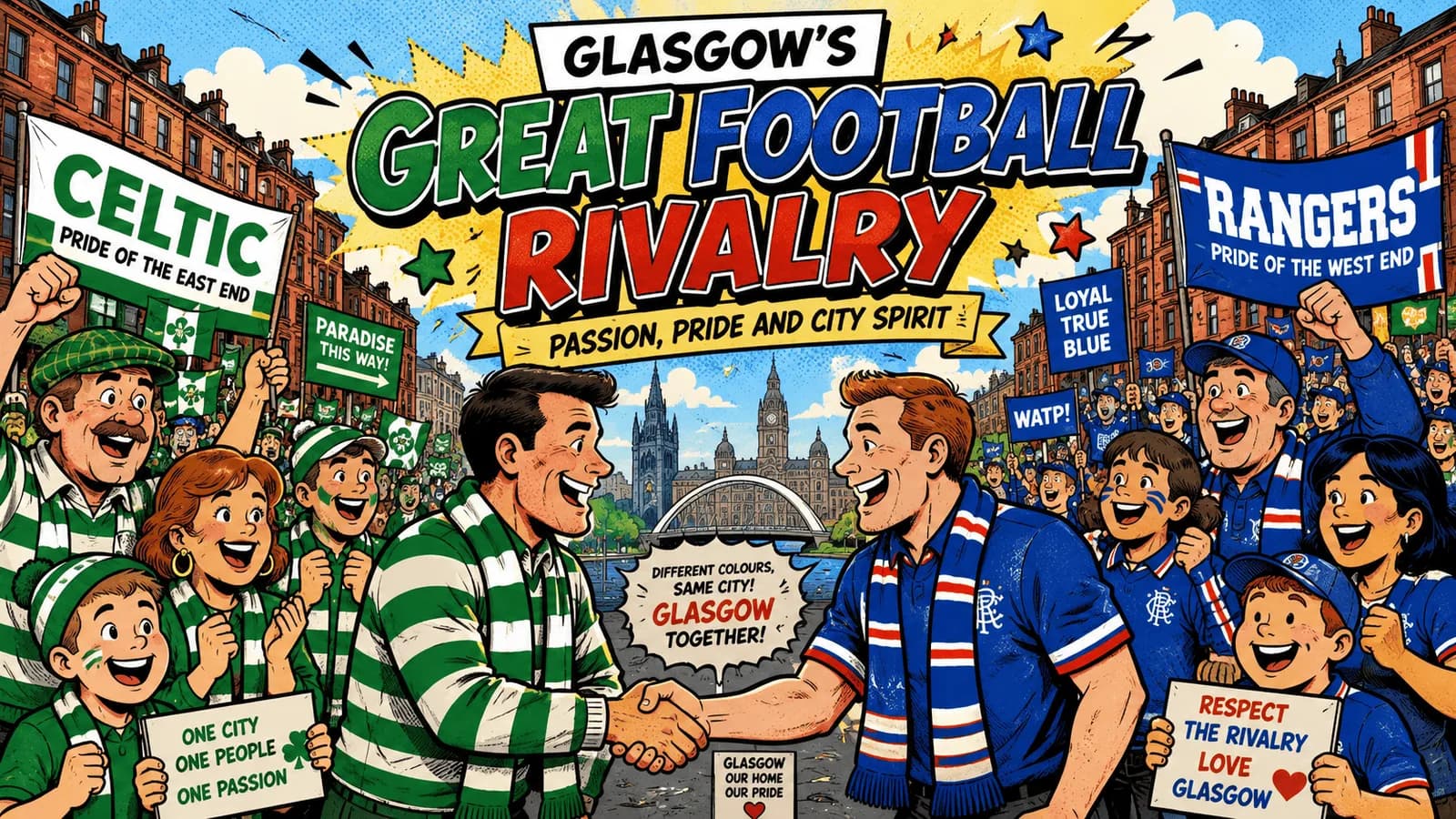
Few football rivalries in the world carry the history, passion and intensity of Celtic and Rangers.
For generations, the Old Firm derby has been one of Glasgow’s defining sporting fixtures, filling pubs, homes, workplaces and stadium seats with anticipation long before kick-off. The colours may divide families, friendship groups and streets for 90 minutes, but the rivalry also reflects something deeply powerful about the city itself: loyalty, identity, humour, pride and community.
At its best, the Celtic and Rangers rivalry is not only about who wins on the pitch. It is about the stories passed down through families, the grandparents who took children to their first match, the friends who trade jokes all week, and the city that comes alive whenever derby day approaches.
For many Glaswegians, supporting Celtic or Rangers is part of growing up. It is stitched into family traditions, weekend routines and memories of unforgettable goals, dramatic title races and famous European nights. The rivalry has produced sporting legends, unforgettable atmospheres and moments that have placed Glasgow firmly on the global football map.
While the passion of the fixture is undeniable, there is also a positive side that deserves recognition. Across Glasgow, supporters from both clubs work, study, volunteer and live side by side. They may disagree on football, but they often share the same workplaces, schools, charities, local causes and neighbourhood pride.
Both Celtic and Rangers also play major roles beyond football. Through community foundations, charitable work, youth programmes and local outreach, the clubs continue to support people across Glasgow and beyond. From health and wellbeing initiatives to education, inclusion and fundraising, the influence of both clubs reaches far outside their stadiums.
The Old Firm rivalry will always be competitive. That is part of what makes it special. But Glasgow’s strength lies in its ability to hold that passion while still recognising what unites the city.
Football can divide opinion, but it can also create conversation, belonging and shared memories. In Glasgow, Celtic and Rangers are more than clubs. They are part of the city’s culture, history and heartbeat.