Halloween in Ayrshire had witches long before pumpkin lanterns and fancy dress.
It was at Alloway Auld Kirk, just a few miles from Ayr Racecourse, that Robert Burns set the most famous scene in Tam o' Shanter, with Tam stumbling across witches and warlocks dancing inside the ruined kirk before making his desperate escape towards the Brig o' Doon.
This year there is another reason to head down from Glasgow on Halloween. Ayr Racecourse opens its 2026/27 jumps season on Saturday 31 October, bringing racing back over hurdles and fences on the night most closely associated with Burns's supernatural Ayrshire.
Before that, the course has one final afternoon of Flat racing on Thursday 8 October, bringing its 2026 Flat season to a close.
For Glasgow racegoers, both meetings are straightforward days out, with direct trains from Glasgow Central to Ayr.
Two October days at Ayr
The first comes on Thursday 8 October, when Ayr stages its final Flat meeting of the year.
It is the last chance to see Flat racing at the course before attention turns completely to the winter game, with the meeting also marking the end of Ayr's seasonal championships.
Then, on Saturday 31 October, the fences and hurdles return.
Ayr is leaning into the date with its Halloween meeting, but the racing itself marks the beginning of a much longer story. The opening fixture starts a jumps season that will eventually build towards the Scottish Grand National meeting next April.
Ayr's next jumps meetings follow on Wednesday 11 November and Monday 30 November.
Hamilton Park, meanwhile, has completed its racing for 2026 after a particularly significant summer. This year marked a century since racing began at its Bothwell Road home in 1926.
Racing in Ayr goes back centuries
Ayr's association with horse racing is considerably older.
Records trace racing in the town back to 1576, although the first properly organised meeting took place in 1771.
The first Ayr Gold Cup followed in 1804 and eventually became the centrepiece of one of Scotland's biggest racing festivals.
The race looked very different in its early years. It was originally run over a much longer distance at the old course at Seafield before becoming a handicap in 1855. By the late nineteenth century it had developed towards the sprint contest racegoers know today.
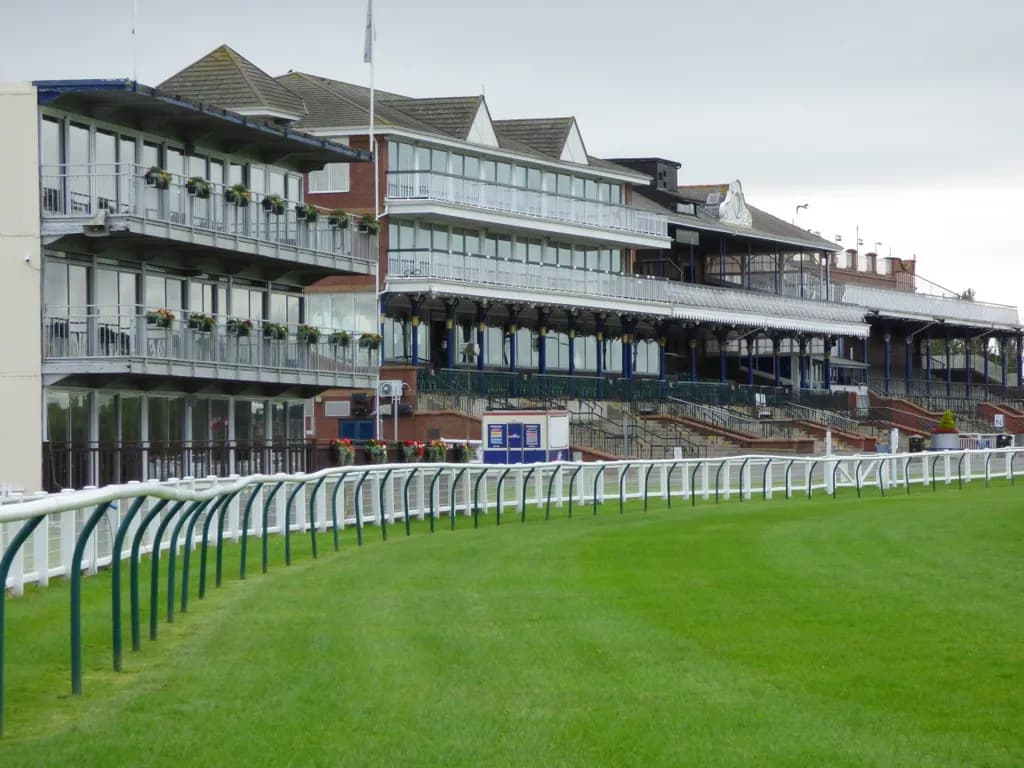
Ayr Racecourse moved from Seafield to its present Craigie site in 1907. The new course was deliberately influenced by Newbury, with a six-furlong straight that remains one of its defining features.
The Ayr Gold Cup moved too and was shortened to six furlongs in 1908.
It has produced more than its share of racing history since.
Dazzle remains unique in winning the Gold Cup three years running, from 1889 to 1891, while the weights carried by winners across the decades show just how much the race has changed. Marmaduke Jinks won with just 6st 13lb in 1936, while Roman Warrior carried 10st to victory in 1975.
Roman Warrior also remains the most recent Scottish-trained winner.
More recently, the 2025 meeting produced an unusual double for trainer Richard Spencer, jockey George Wood and owner Phil Cunningham. Run Boy Run won the Ayr Gold Cup after the same team had already taken the Silver Cup with Candy.
Then came the jumps
Jump racing was added at Ayr in 1950, opening the way for year-round racing.
Its importance increased dramatically in 1966 when the Scottish Grand National moved to Ayr following the closure of Bogside Racecourse near Irvine.
The race itself is much older. Its roots stretch back to the nineteenth century before it eventually found its permanent home in Ayrshire.
And one horse in particular made sure Ayr became part of Grand National folklore.
In 1974, Red Rum arrived at Ayr just three weeks after winning his second Grand National at Aintree.
Ridden by Brian Fletcher, he beat Proud Tarquin by four lengths to complete a feat that has never been repeated: winning both the Aintree Grand National and Scottish Grand National in the same season.
Half a century later, the Scottish National is still capable of drawing major horses and trainers north.
Willie Mullins won the race with Macdermott in 2024 before returning to take it again with Captain Cody in 2025.
What October racing is like
The two Ayr meetings this month should have quite different characters.
On 8 October, Flat horses are reaching the end of campaigns that for some began in the spring. Autumn weather can also change conditions quickly, particularly on Scotland's west coast.
By Halloween, the picture changes.
The return of jump racing means horses coming back from summer breaks, novice hurdlers beginning new campaigns and chasers taking the early steps towards some of the winter's bigger meetings.
For anyone accustomed to Flat racing, it is a very different spectacle.
Ayr is left-handed and relatively galloping, rather than a tight course where races can become badly congested. The jumps circuit is around a mile and a half, while the Flat course includes its distinctive straight six furlongs.
For a first-time visitor, there is no need to know the form book inside out to enjoy it.
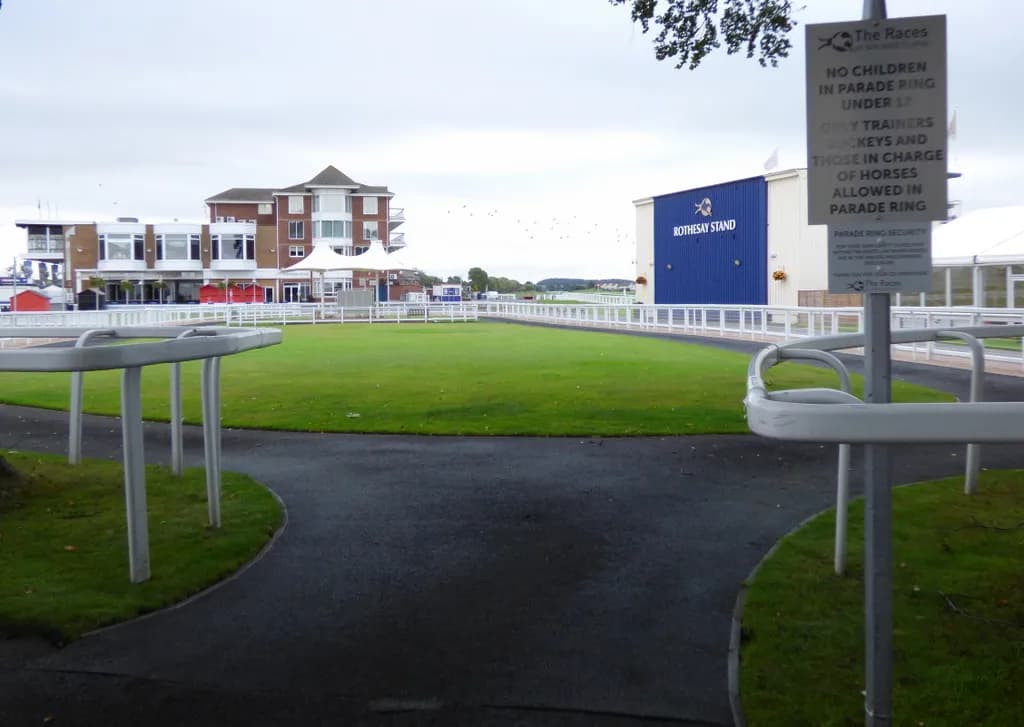
Spend some time at the parade ring before a race, watch the horses and jockeys head out onto the course, then move towards the rail for the finish. Seeing the scale and speed of a race from ground level is very different from watching it on television.
If you do want a bet, keep it simple. Bookmakers offer fixed odds, while the Tote operates pool betting. Decide what you are comfortable spending before racing starts rather than treating every race as one that requires a bet.
A Halloween day in Burns country
The 31 October meeting has one advantage that few British racecourses could reproduce quite as convincingly.
Alloway is only a short journey away.
The ruined Alloway Auld Kirk is where Burns imagined Tam o' Shanter discovering witches and warlocks dancing as he made his way home from Ayr.
The scene ends with Tam fleeing towards the Brig o' Doon, pursued by the witch Nannie. Tam and his horse reach the bridge, but not before Nannie catches the mare's tail.
Both the kirk and Brig o' Doon can still be visited today, along with Burns Cottage, the Burns Monument and Robert Burns Birthplace Museum.
Burns's connection with Halloween goes beyond Tam o' Shanter. He also wrote Halloween, drawing on the customs, superstitions and courtship rituals associated with the night in rural Ayrshire.
So racing at Ayr on 31 October is not simply a meeting that happens to fall on Halloween. It takes place only a few miles from some of Scotland's most famous stories of witches, ghosts and superstition.
That makes a Burns detour before or after the racing feel considerably less contrived than most Halloween attractions.
Making the trip from Glasgow
Direct trains run between Glasgow Central and Ayr, with the journey taking you straight into the centre of town. From Ayr station, the racecourse is a short taxi journey or a longer walk.
Driving from Glasgow is also relatively simple via the M77 and A77.
There is plenty around Ayr to justify arriving earlier.
The town's Auld Brig crosses the River Ayr and features in Burns's The Brigs of Ayr, while the beach and esplanade offer a long walk along the Firth of Clyde. On a clear day, the view towards Arran is one of the best reasons not to leave the journey until the last possible train.
For the Halloween meeting, however, Alloway is the obvious addition.
A day that begins with Burns, witches and the Brig o' Doon before ending with the first jumps meeting of Ayr's new season is a particularly Scottish way to spend 31 October.
And from Glasgow, it is all less than an hour down the railway line.
Before travelling, check Ayr Racecourse directly for the latest race times, tickets and going conditions. Autumn weather can change racing plans, so it is also worth checking again on the morning of the meeting.