In November 1915, working-class housewives across Glasgow brought the machinery of rent collection to a standstill. Their leader was Mary Barbour, a Govan mother whose "army" of tenants forced the government to pass the first rent control legislation in British history.
The Spark: Wartime Profiteering in Govan
In February 1915, landlords across Glasgow announced that rents would increase by 25 per cent. The timing could not have been more exploitative. Britain was sixteen months into the First World War, and Glasgow's shipyards and munitions factories were swelling with workers drawn to wartime production. The city's population had ballooned from roughly 200,000 in 1851 to over one million by 1921, yet only 1,500 new housing units were built between 1912 and 1915, even as the population grew by 65,000.
The housing shortage was acute. According to housing records from the period, 11 per cent of Glasgow's housing stock sat vacant due to speculation. Landlords saw opportunity in the crisis. Working-class families, many with husbands and sons fighting in France, were told to pay up or face eviction.
Organising the Resistance
Mary Barbour, then forty years old and living at 43 Ure Street (now Uist Street) in Govan, refused to accept the increases. Born Mary Rough in Kilbarchan, Renfrewshire, on 20 February 1875, she had married engineer David Barbour in 1896 and raised their children in the tenements of Fairfield ward. She was not a politician or a trade union official. She was a housewife who understood that collective action was the only defence against collective exploitation.
In March 1915, Barbour helped establish the South Govan Women's Housing Association, serving as its chair. Working alongside activists including Helen Crawfurd, Agnes Dollan, Mary Laird, Mary Jeff, and Jessie Stephen, she began organising tenant committees across Govan. The group would become the nucleus of what the press soon dubbed "Mrs Barbour's Army."
The women devised ingenious tactics tailored to Glasgow's tenement geography. A lookout system was established: one woman per close kept watch for sheriff officers. When officials approached, she raised the alarm by banging pots and pans, blowing whistles, and shouting warnings. Other women would then pack the tenement stairwells, physically blocking entry. Bailiffs who managed to get inside faced flour bombs, rotten fruit, and wet washing hurled from above. Windows displayed posters reading "WE ARE NOT MOVING."
The Strike Spreads Across Glasgow
By May 1915, approximately 25,000 tenants had joined the rent strike. The movement spread from Govan to Partick, Parkhead, Pollokshaws, Pollok, Cowcaddens, Kelvingrove, Ibrox, Govanhill, St Rollox, Townhead, Springburn, Maryhill, Blackfriars, Woodside, and beyond.
The strike gained crucial support from the trade unions. Dave Kirkwood, convenor of shop stewards at Parkhead Forge, wrote to the Town Clerk stating that the workers would regard any attempt to evict tenants as "an attack on the working class." The implicit threat was clear: factory strikes would follow if evictions proceeded. Barbour reportedly drafted in men from Govan's shipyards to confront factors who tried to collect increased rents. According to Helen Crawfurd's memoir, the workers' presence alone was enough to make agents hand over the money.
By October 1915, 15,000 households were on strike. By November, the figure reached 20,000 families, with some estimates suggesting a peak of 25,000 to 30,000 households.
The Confrontation at Brunswick Place
The crisis came to a head on 17 November 1915. The city attempted to prosecute eighteen tenants at the sheriff court in Brunswick Place, Partick, for rent arrears. The response was immediate and overwhelming.
Thousands of strikers converged on the court. Some estimates put the crowd at 20,000 people. They sang songs, waved placards, and heard speeches from labour leaders including John Maclean, Willie Gallacher, and James Maxton. The authorities, faced with the prospect of mass disorder and the potential shutdown of Glasgow's vital war industries, backed down. The charges were dropped.
David Lloyd George, then Minister of Munitions, intervened directly. He reportedly told sheriff court officials to "release the tenants and I will get something done." His promise was kept.
Victory: The Rent Restrictions Act
On 25 November 1915, just eight days after the Brunswick Place demonstration, the government introduced the Increase of Rent and Mortgage Interest (War Restrictions) Act 1915. The Act received royal assent on 23 December 1915 and was made retrospective to 4 August 1914.
The legislation was revolutionary. It froze rents at pre-war levels and prohibited landlords from increasing them unless they could prove improvements had been made to the property. The Act applied across Britain, not just in Glasgow. What began as a local protest in Govan tenements had become national law.
The Act was initially temporary, intended to last for the duration of the war plus six months. However, some sections remained in force until 1989, seventy-four years after their enactment. The legislation also paved the way for the Housing, Town Planning, &c. Act 1919, which funded the construction of 213,000 government-subsidised "Homes Fit For Heroes."
From Activist to Magistrate
Mary Barbour did not return to obscurity after the strike. In 1920, she was elected to Glasgow Town Council as the Labour candidate for Fairfield ward in Govan, becoming one of the first women to serve on the council. She served as one of Glasgow Corporation's first female bailies from 1924 to 1927 and became the first woman magistrate in Glasgow.
In January 1928, she was appointed Justice of the Peace for Glasgow. From 1925, she chaired the Glasgow Women's Welfare and Advisory Clinic, which opened Scotland's first birth control clinic at 51 Govan Road in August 1926. She retired from the council in 1931 but remained active in health and welfare services until her death on 2 April 1958 at the Southern General Hospital, aged 83.
Legacy in Stone and Memory
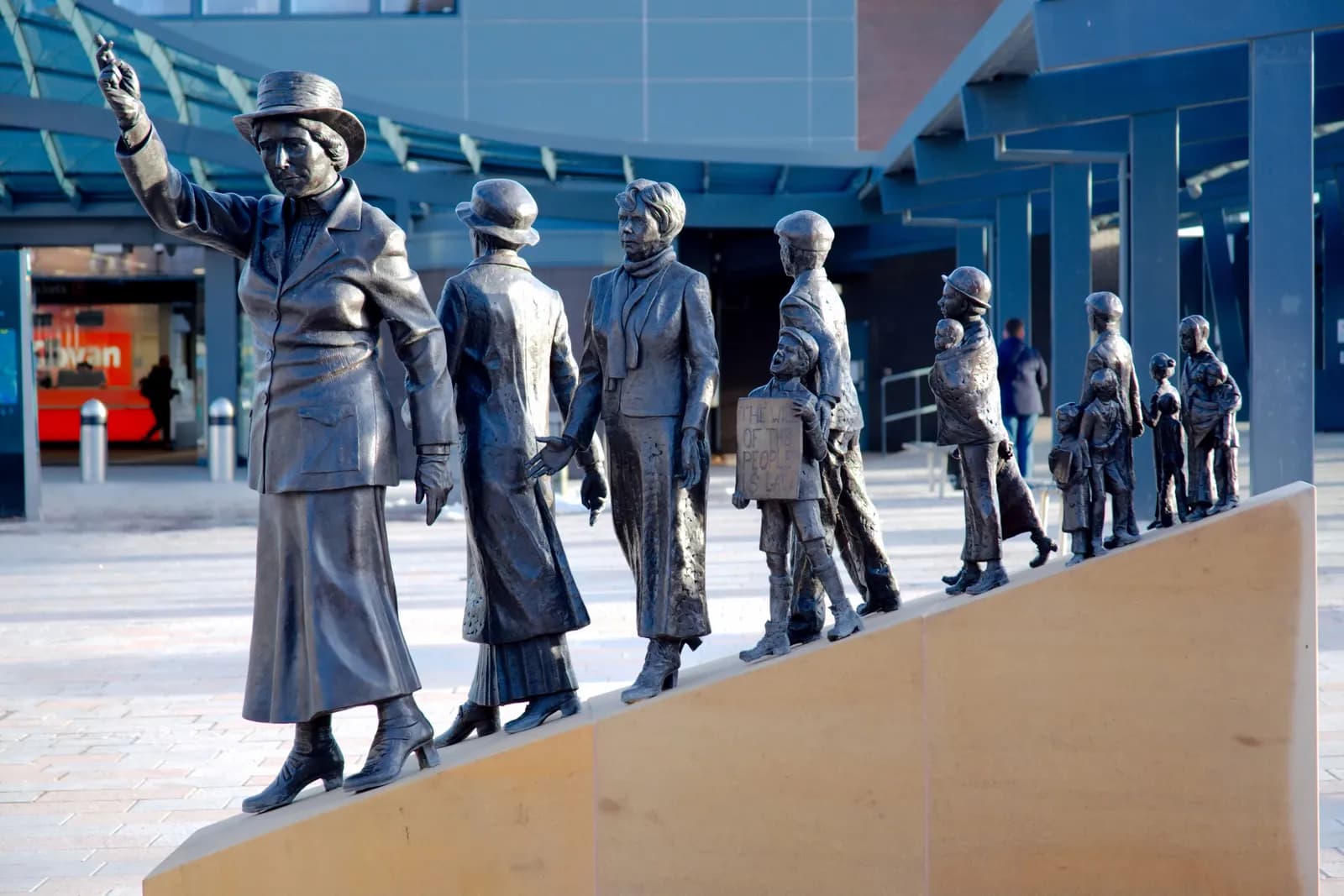
Mary Barbour's legacy endures in Glasgow's physical landscape and cultural memory. A bronze statue by sculptor Andrew Brown was unveiled at Govan Cross in March 2018, depicting Barbour leading rent strikers. A blue plaque marks 10 Hutton Drive in Linthouse, Govan, where a rent strike action was photographed. In her birthplace of Kilbarchan, Renfrewshire, a cairn was unveiled in November 2015 to mark the centenary of the strike.
The story has been preserved in song by folk musician Alistair Hulett and dramatised in A.J. Taudevin's play "Mrs Barbour's Daughters." The phrase "Mrs Barbour's Army" remains shorthand in Glasgow for grassroots resistance against injustice.