I have walked Glasgow’s streets for years, but it is only when you stop and look properly at the names above your head that the city begins to tell you where it came from. Merchants, kings, willow groves, goose ponds and even badgers are all still here, quietly hiding on our street signs.
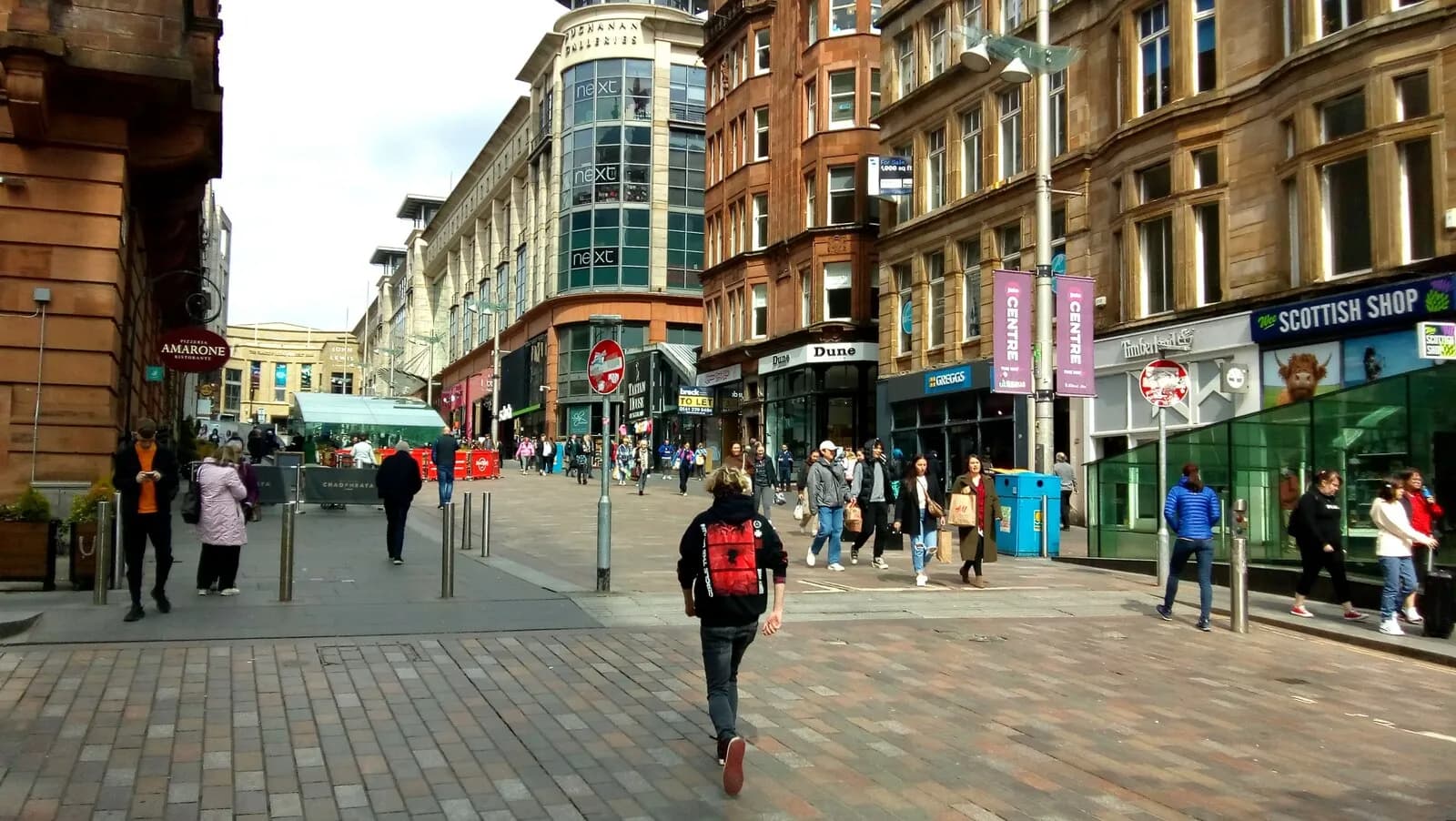
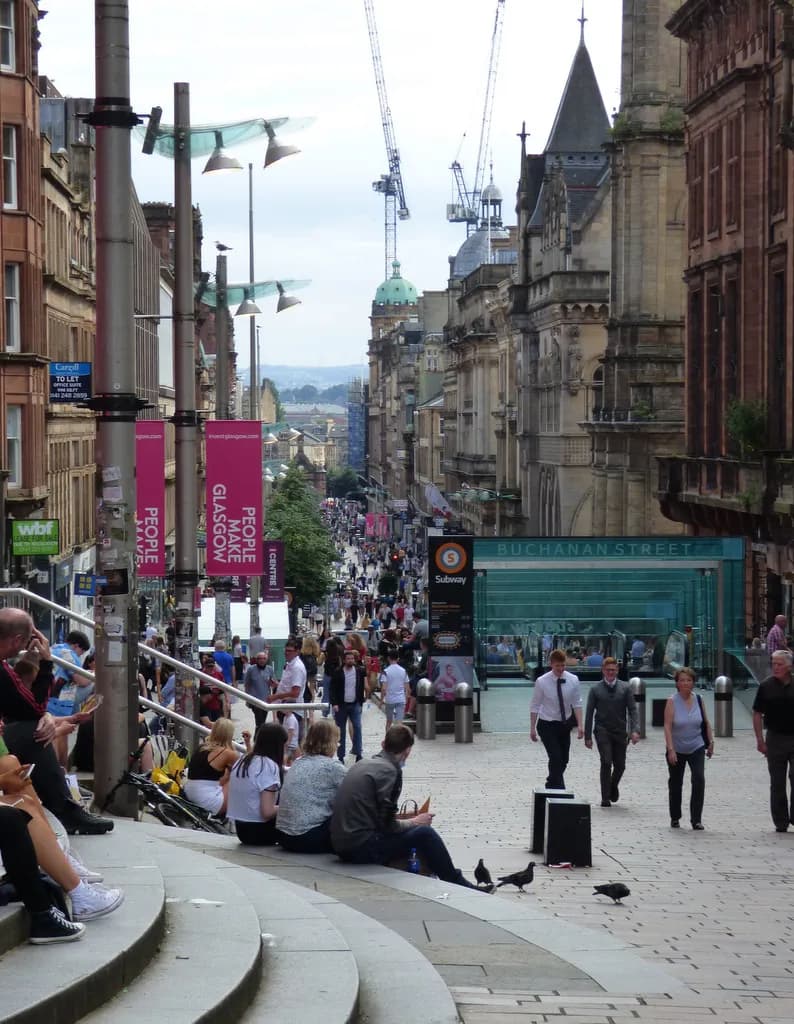
There are days when Glasgow feels as though it was built to be explored on foot. You can begin among the crowds on Buchanan Street, drift down towards Argyle Street and, before long, find yourself wondering why these familiar places have the names they do.
We use them without thinking. We arrange to meet in George Square, catch a bus along Sauchiehall Street or tell a taxi driver we are heading for Anderston. Yet every one of those names carries a small piece of Glasgow’s history.
Once you start noticing them, an ordinary walk through the city becomes something closer to a conversation with the past.
The merchants who wrote themselves onto the map
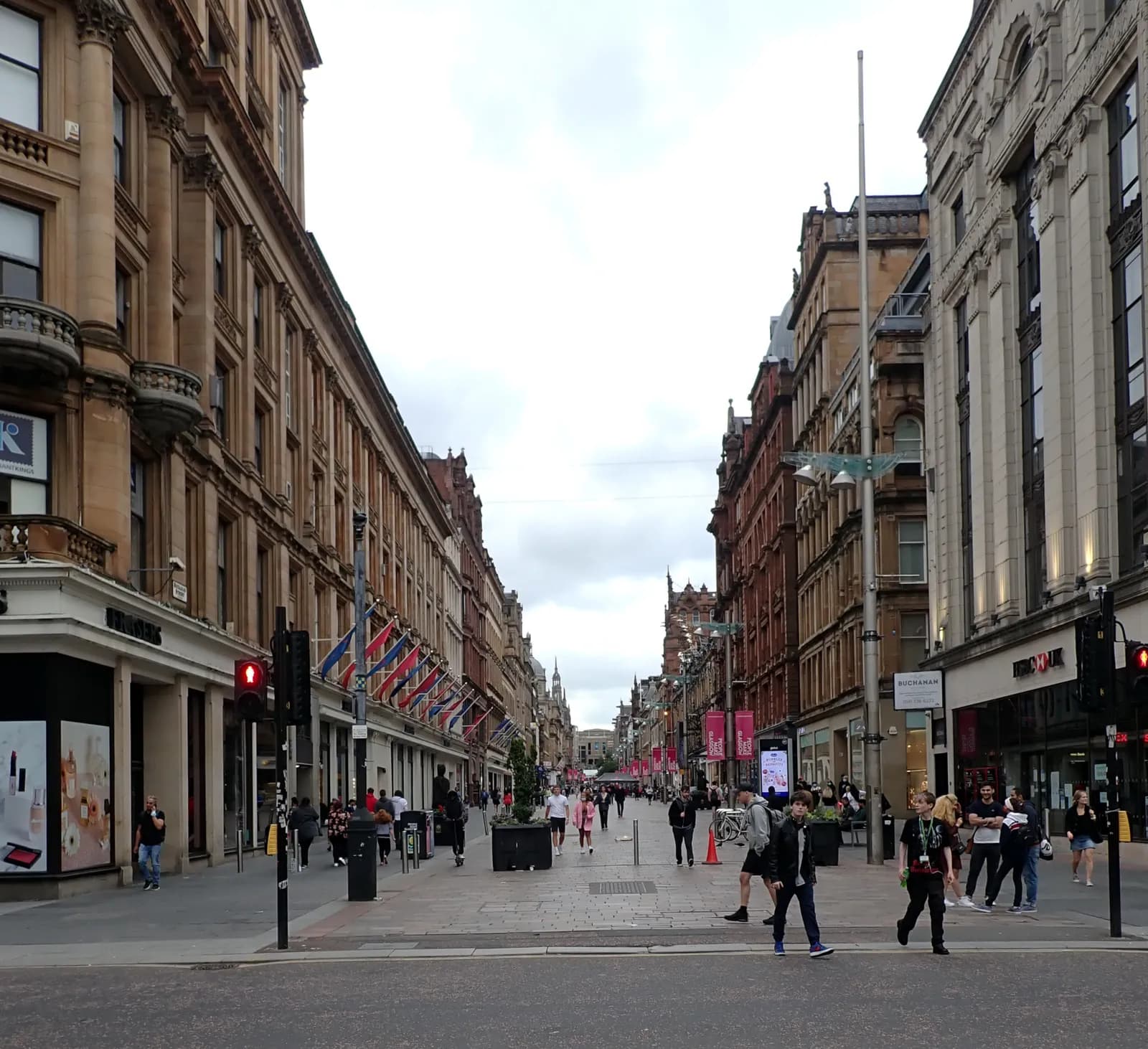
Buchanan Street may now be known for shops, cafés and people trying to walk in six different directions at once, but its name takes us back to Andrew Buchanan, one of the city’s wealthy tobacco merchants.
As Glasgow expanded, influential merchants and landowners had a habit of leaving their names behind. Buildings disappear and businesses close, but a street name can last for centuries.
Argyle Street recalls the Duke of Argyll, while George Square was named in honour of King George III. Today, George Square is where we gather for celebrations, protests, Christmas lights and the occasional encounter with a particularly determined pigeon. Its name, however, belongs to an age when Glasgow was growing rapidly and looking to demonstrate its importance.
These grand names are reminders that the city centre was shaped not only by architects and planners, but by money, status and power.
When Sauchiehall Street was a willow grove
Some of Glasgow’s best names have much humbler beginnings.
Sauchiehall Street comes from words meaning something close to “willow meadow” or “willow grove”. That can be difficult to picture when you are standing beside traffic, scaffolding and late-night takeaway shops, but the name remembers a softer landscape that existed before the modern city arrived.
Then there is Goosedubbs, surely one of the finest place names in Glasgow. It sounds as though it belongs in a children’s story, but the explanation is wonderfully practical. The area was once associated with pools or muddy hollows where geese gathered.
I like names like that. They strip away the grand statues and merchant houses and give us a glimpse of everyday life. You can almost imagine the noise, the mud and the complaints of whoever had to walk past those geese.
Even the word “vennel”, still found in Scottish street names, comes from an old Scots word for a narrow lane or passage. It reminds us that the language of earlier Glaswegians remains built into the city itself.
From Anderson Town to Anderston
Glasgow’s neighbourhoods have their own stories.
Anderston developed from land connected with James Anderson of Stobcross and was once referred to as Anderson Town. Over time, as often happens in Glasgow, the name was shortened, softened and made more convenient.
Pollok is thought to have roots in the Gaelic word pollag, referring to a small pool or hollow. It is a name that invites us to imagine the land before roads, estates and roundabouts took over.
Ibrox has an even more appealing origin. Its name is commonly connected to old words associated with badgers. Long before football supporters filled the streets on match days, the local residents may have been small, striped and considerably less interested in the final score.
Castlemilk, meanwhile, developed from the name Cassiltoun, an old estate that existed before the modern community grew around it.
Not every explanation is completely certain. Place names change as languages overlap, spelling evolves and stories are repeated from one generation to the next. That uncertainty is part of the fun. Glasgow does not always hand over its secrets easily.
History hiding above our heads
The next time you are walking through Glasgow, look up at the street signs.
They are not simply directions. They are fragments of farms, estates, landscapes, languages and people who helped shape the city. Some names celebrate wealth and influence. Others remember trees, animals, water and muddy lanes.
That is what I love about Glasgow. Its history is not locked away behind museum glass. It is on the buses, in the neighbourhoods and spoken every day by people arranging where to meet.
We may think we are only walking to the shops, heading to work or trying to find the quickest route home. In reality, we are following paths laid out by centuries of Glasgow life.
And sometimes, the whole story is written on the sign above us.